

Boda Stone Outlines Planning Checks for Curved Architectural Stone Fabrication
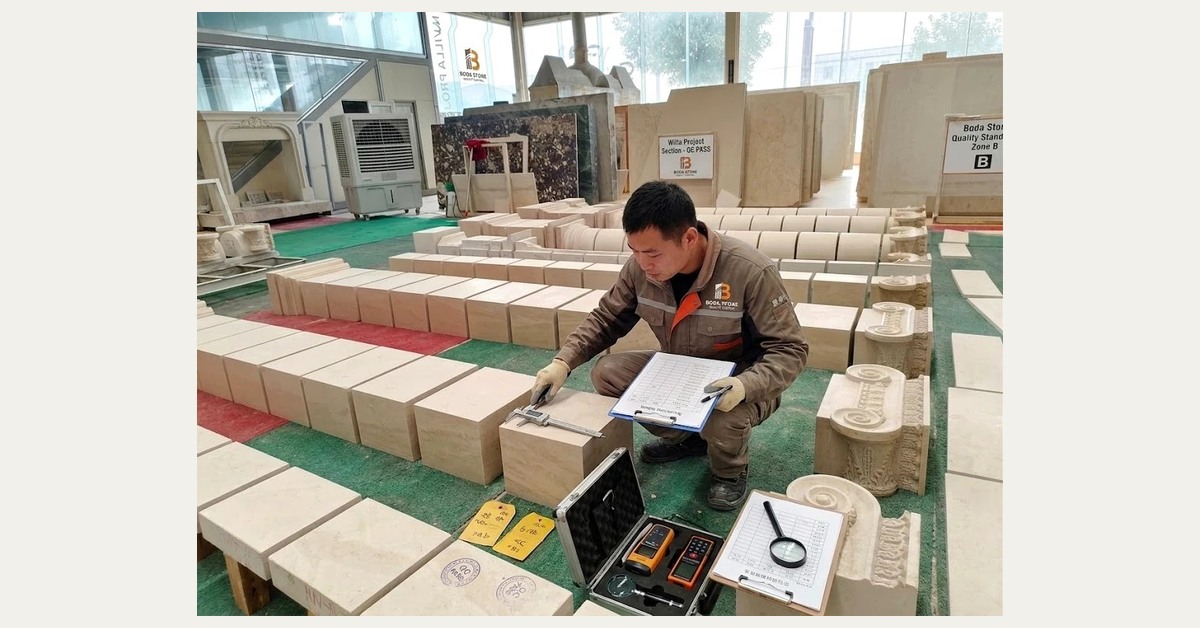
William Jiang reviewing architectural stone quality records
The manufacturer explains model review, component divisions and shipment checks for architects and stone contractors.
HUIAN, FUJIAN, CHINA, October 30, 2026 /EINPresswire.com/ -- Boda Stone, a China-based manufacturer of custom architectural stone, is outlining planning checks for curved and special-shaped components through its English-language project website, SculptStoneWorks.com. The guidance addresses how architects, stone contractors and fabricators can connect approved design information with production, inspection and international delivery.
Curved architectural stone fabrication turns approved radii, profiles and three-dimensional surfaces into individual natural-stone components. Boda Stone's curved-stone fabrication page covers radius facade pieces, compound curves, complex corners and transitions, with applications including feature entrances, rotundas and sculptural building elements.
Can curved stone be manufactured from a 3D model?
A 3D model can provide the design basis after review of surface quality, scale, stone thickness, joint strategy and machining access. Boda Stone identifies control sections, radii and interface requirements as key inputs. A model's visual appearance alone does not establish that every detail is ready for manufacturing.
For an initial quotation, the company's buyer guidance requests reviewable geometry, dimensions, quantities, proposed stone and finish, destination and delivery requirements. Drawings can show the intended result while leaving some details unresolved; those open decisions should be identified so the quotation records its assumptions. Production approval requires a coordinated basis for the components actually being made.
Why do material selection and component divisions matter?
The material review considers the actual stone source, available block dimensions, bedding or vein direction, finish and intended exposure. Limestone, marble, granite, sandstone and travertine present different project considerations. Selection depends on the proposed variety and supporting evidence rather than the material name alone; testing requirements and acceptance criteria are agreed for the individual project.
Component divisions also connect design with handling. Joint locations affect the visible composition and the interfaces between adjacent pieces, while block availability, packed dimensions, shipping weight and site access influence how large work can be supplied. The manufacturing brief should therefore coordinate the intended assembly with the receiving team's unloading and installation arrangements.
How are curved components checked before shipment?
Boda Stone's published factory workflow combines machine cutting and computer numerical control (CNC) roughing with skilled hand carving and surface finishing. The inspection route is defined by the approved drawings and the component's function. For curved work, checks may include digital measurement, physical templates, interface dimensions and partial or full dry assembly where required.
The company recommends assigning tolerances to the conditions that matter, such as joint geometry, profile alignment and support interfaces. Dimensional acceptance and visual approval serve different purposes: a component can meet a measured dimension while still requiring review of finish, colour range or carving character. Inspection records should identify the relevant piece and approved drawing revision.
What information supports international handover?
Boda Stone's packing and installation coordination guidance connects component marks with drawings, crate references and shipment records. Agreed handover information may include piece lists, weights, orientation references, inspection photographs and assembly information. These records help the destination team identify components and prepare for receipt before the crates are opened.
The factory supplies the fabrication and coordination information agreed for the order. Destination engineering, anchorage, lifting arrangements, local approvals and installation remain with the project's qualified local professionals. These responsibilities should be resolved alongside the manufacturing scope.
Boda Stone handles export production on a full-container-load basis, with samples, prototypes and first-article reviews planned within confirmed projects. Project teams can submit drawings or a 3D model together with dimensions, quantities, material preferences and destination for a scope-specific review through SculptStoneWorks.com.
About Boda Stone
Boda Stone is the trading name of Fujian Huian Boda Stone Co., Ltd., based in Hui'an, Fujian, China. The company manufactures custom architectural stone components, carving and monumental sculpture from approved project drawings, models and specifications. Its stone-business heritage dates to 1996; the current legal entity was registered in 2017. SculptStoneWorks.com is its English-language project website.
Media enquiries: William Jiang, General Manager & Technical Reviewer, Boda Stone, +86 135 9950 4114.
William Jiang
Boda Stone
13599504114
info@sculptstoneworks.com
Legal Disclaimer:
EIN Presswire provides this news content "as is" without warranty of any kind. We do not accept any responsibility or liability for the accuracy, content, images, videos, licenses, completeness, legality, or reliability of the information contained in this article. If you have any complaints or copyright issues related to this article, kindly contact the author above.
