

Shengtai Chemical Strengthens Its Position as a Leading Ammonium Chloride Fertilizer Supplier in China
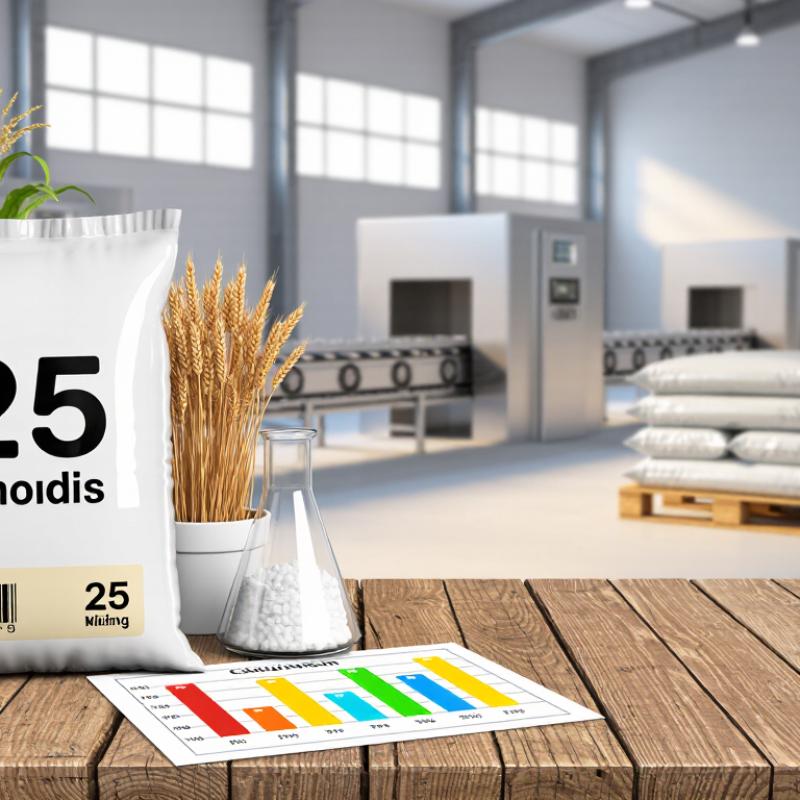
Choosing the best ammonium chloride fertilizer supplier in China involves more than comparing quoted prices. Buyers should consider product consistency, chloride content, nitrogen concentration, packaging quality, and shipping reliability. These factors directly affect fertilizer performance and agricultural applications. Ammonium chloride typically contains approximately 25%–26% nitrogen and 66%–67% chloride, making crop suitability an important consideration before purchasing.
According to the International Fertilizer Association’s Medium-Term Fertilizer Outlook 2024–2028, global fertilizer demand is expected to continue growing, reaching approximately 205 million tonnes of nutrients by 2028. This trend highlights the importance of improving nutrient-use efficiency. As FAO reports emphasize, fertilizer decisions should consider soil conditions, crop requirements, and responsible application practices.
Patrick Heffer, a fertilizer-market specialist and former representative of the International Fertilizer Association, has emphasized that fertilizer use must be balanced with better nutrient efficiency. This principle is equally important when selecting an ammonium chloride fertilizer supplier in China. Reliable suppliers should provide recent laboratory reports, clear nitrogen specifications, traceable batch information, and practical guidance for chloride-sensitive crops.
Before purchasing, inspect sealed 25 kg bags, readable lot numbers, and certificates of analysis that match the shipped products. These details help reveal whether a supplier maintains effective quality-control procedures.
Supplier claims should also be verified through factory records, independent testing, export experience, and customer feedback. The lowest quotation is not necessarily the safest or most economical option in the long term.
## What Is Ammonium Chloride Fertilizer?
Ammonium chloride fertilizer is an inorganic nitrogen fertilizer with the chemical formula NH4Cl. It generally appears as white crystals or small granules and dissolves readily when sufficient soil moisture is available. Its nitrogen supports leafy growth, protein formation, and early crop development, while its chloride content influences soil chemistry.
In agricultural applications, ammonium chloride can support rice, wheat, corn, and several grass crops. It is most suitable when soil tests indicate nitrogen deficiency and acceptable chloride levels. However, repeated heavy application may increase soil acidity or salinity. Chloride-sensitive crops, including certain vegetables and fruit crops, may respond poorly.
Proper application requires soil testing, measured nitrogen planning, and appropriate timing. Avoid excessive application in saline fields and keep fertilizer away from seeds when possible. If crop performance declines, evaluate soil moisture, pH, drainage, and potassium levels before attributing the problem to fertilizer quality.
## Why Choose a Chinese Ammonium Chloride Fertilizer Supplier?
Choosing a Chinese ammonium chloride fertilizer supplier can offer sourcing flexibility for agricultural distributors and importers. China has established fertilizer production capacity, extensive port infrastructure, and experience in bulk chemical exports. However, competitive supply does not automatically guarantee consistent product quality.
Reliable suppliers should provide specifications covering nitrogen content, moisture, particle size, and water-insoluble impurities. Buyers should request recent laboratory reports and batch-specific certificates of analysis. Packaging quality is equally important. Woven bags with moisture-resistant inner liners and proper palletization help prevent caking during ocean transportation.
Request product samples before placing large orders. Check batch numbers, loading photographs, shipping documents, and destination-market fertilizer requirements.
A capable supplier should explain production controls rather than simply offering the lowest price. Factory audits, video inspections, and independent testing can help reduce purchasing risks. Contracts should clearly define product standards, inspection procedures, packaging requirements, delivery schedules, payment terms, and responsibility for damaged goods.
## How to Evaluate Supplier Quality and Production Capacity
Selecting the China best ammonium chloride fertilizer supplier requires careful evaluation of manufacturing processes and production capacity. Quality depends on consistent raw materials, controlled crystallization, and clean packaging facilities.
Request recent test reports covering nitrogen content, moisture, chloride content, and insoluble matter. Independent laboratory verification provides additional confidence beyond internal supplier certificates. During factory inspections, examine sealed bags, batch labels, warehouse conditions, and production equipment.
Production capacity should match purchasing schedules. Ask for monthly output records, warehouse information, equipment details, and previous shipment records. Buyers should also check maintenance procedures, backup power arrangements, and loading capabilities.
Whenever possible, visit the factory and compare at least three production batches. A trial order is advisable before signing a large supply contract. Reviewing production lead times during peak fertilizer seasons can also help prevent unexpected delays.
## Which Product Specifications Matter Most?
When evaluating an ammonium chloride manufacturer, nitrogen content is one of the most important indicators. Agricultural-grade products generally contain approximately 25%–26% nitrogen, but declared specifications should match laboratory test results.
Moisture content also affects product handling. Excess moisture may cause caking, uneven spreading, and storage difficulties. Particle size influences fertilizer application performance, with granules between 2 and 4 millimeters often providing more uniform spreading than excessive powder.
Chloride content deserves particular attention when purchasing fertilizer for potatoes, tobacco, and other chloride-sensitive crops. Buyers should also examine solubility, bulk density, color, and water-insoluble matter.
A current certificate of analysis should identify nitrogen content, moisture, particle-size distribution, and testing methods. Suppliers should also provide safety data sheets, traceable lot numbers, and appropriate storage recommendations.
Typical agricultural-grade reference values include nitrogen content of at least 25.0%, moisture of no more than 0.5%, and water-insoluble matter of no more than 0.5%. At least 90% of particles should fall within the agreed size range. Actual requirements depend on applicable standards and purchasing contracts.
Price should never be the only selection criterion. Comparing samples under actual spreading conditions can reveal differences in dust levels, flowability, and granule breakage that may not appear on specification sheets.
## How to Verify Certifications, Testing, and Compliance
A reliable supplier should provide verifiable compliance documents rather than simply displaying certificates. Buyers should check whether ISO 9001 certification covers the actual fertilizer production facility and whether laboratory testing is supported by appropriate ISO/IEC 17025 accreditation.
Request a batch-specific Certificate of Analysis listing nitrogen content, chloride content, moisture, particle size, and inspection methods. For agricultural applications, heavy-metal test results may also be necessary depending on local regulations.
Each shipment should be traceable through production dates, batch numbers, retained samples, and corresponding laboratory records. A certificate from one sample cannot guarantee the quality of an entire container.
Compliance also involves a current Safety Data Sheet, correct transportation classification, and destination-market import requirements. For Chinese production, buyers should confirm the applicable GB/T ammonium chloride standard and verify that laboratory testing follows the required methods.
## How to Compare Pricing, Packaging, and Delivery Terms
When comparing a China ammonium chloride factory, buyers should evaluate the complete purchasing cost rather than focusing only on the product quotation.
The International Fertilizer Association’s 2024 outlook estimates global fertilizer demand at approximately 192 million tonnes of nutrients in 2024/25. This figure covers all fertilizer nutrients rather than ammonium chloride alone.
**Pricing and Cost Components**
Ammonium chloride is generally quoted per metric ton. Prices vary according to product grade, production origin, order quantity, season, and destination.
Standard export products generally involve basic product and packaging costs. Granular agricultural grades may cost more because of screening, granulation, and additional quality-control procedures. Industrial bulk orders may offer lower unit prices for full-container or recurring purchases.
Buyers should request separate quotations for product prices, packaging, documentation, freight, insurance, and port handling. Comparing FOB, CFR, and CIF offers on the same basis helps avoid unexpected costs. A landed-cost calculation provides a more accurate purchasing estimate.
**Packaging and Product Forms**
Common packaging options include 25 kg and 50 kg woven polypropylene bags with inner liners. Granular products may also be supplied in 500 kg–1,000 kg jumbo bags, while industrial bulk supplies can use container liner bags or approved handling systems.
Standard ammonium chloride is generally available as powder or fine crystalline material. Granular products offer more uniform particle sizes and improved flowability. Buyers should check particle distribution, dust levels, caking tendency, bag strength, moisture resistance, and palletization.
**Moisture and Quality Control**
Commercial specifications generally require low moisture and a clean white crystalline appearance. Granular products should also maintain consistent particle shapes and sizes.
Buyers should establish measurable quality limits in the contract and confirm inspection methods before shipment. Batch-specific certificates of analysis and independent laboratory testing can help verify compliance.
**Minimum Order Quantity and Lead Time**
Standard export orders commonly start from one 20-foot container or the supplier's minimum production lot. Granular products generally require similar quantities, although customized packaging may involve higher minimum orders.
Standard products may require approximately 7–20 days after order confirmation, while granular products may take around 10–25 days when additional processing or customized packaging is required. Large industrial orders can be arranged through monthly or quarterly supply programs.
Buyers should distinguish production time from shipping schedules, port booking, and ocean transit to avoid delays during important agricultural seasons.
**Delivery Terms and Export Documentation**
FOB, CFR, and CIF are common delivery arrangements for container shipments. Larger-volume orders may involve negotiated bulk-handling or delivered-to-port arrangements.
Typical export documents include commercial invoices, packing lists, certificates of analysis, and shipping documents. Additional particle-size reports, pre-shipment inspection certificates, and customized labels may be required depending on the destination market.
Contracts should clearly define Incoterms 2020 conditions, the named port, risk-transfer responsibilities, insurance coverage, and destination charges. Buyers should also verify fertilizer registration, labeling, and import requirements before shipment.
**Selecting the Right Supply Option**
Standard export-grade ammonium chloride is suitable for agricultural distributors and buyers seeking flexible container quantities. Granular agricultural-grade products are appropriate for fertilizer blenders and farms requiring improved flowability and more uniform application.
Industrial-scale bulk supplies are better suited to large importers, fertilizer manufacturers, and buyers with established storage and handling facilities.
The best option depends on product specifications, crop requirements, purchasing volume, and total landed cost. Buyers should request current written quotations and batch-specific certificates of analysis before placing orders.
## What to Confirm Before Placing an Order?
Choosing a Chinese ammonium chloride fertilizer supplier requires more than comparing quotations. Buyers should verify the factory address, production capacity, export experience, and recent batch records. Trading companies may also provide useful sourcing services, but their quality-control arrangements should be clearly documented.
Check product specifications carefully. Request certificates of analysis showing nitrogen content, moisture, chloride-related limits, particle size, and appearance. Confirm whether laboratory results come from accredited testing facilities or internal quality-control departments. Applicable Chinese standards and inspection procedures should be clearly stated in the contract.
Packaging should also be inspected before payment. Request photographs of woven bags, inner liners, product labels, pallets, and container loading. For high-value orders, independent weight inspection and retained samples can provide additional protection.
Payment terms deserve equal attention. Confirm production lead time, loading port, Incoterms, claims procedures, and acceptable quantity tolerances. Clear contractual arrangements can reduce disputes and improve long-term cooperation.
## DTPA Chelated Iron for Hydroponics and Fertigation: Benefits, Uses, and Supplier Guide
**DTPA Chelated Iron - Stable Micronutrient Fertilizer from China Suppliers and Factory for Hydroponics and Fertigation**
DTPA chelated iron is a micronutrient source used in hydroponics, fertigation, greenhouse production, and precision agriculture. Its chelating structure helps maintain iron availability in neutral and slightly alkaline growing conditions, where conventional iron salts may become less soluble. This supports chlorophyll formation, leaf development, and photosynthesis while helping reduce iron deficiency in soilless and soil-based systems.
Also known as sodium hydrogen ferric DTPA, the product has CAS No. 12389-75-2, EINECS No. 235-627-0, and molecular formula C₁₄H₁₉FeN₃NaO₁₀. Its molecular weight is 468.15, and it is supplied as a yellow to dark brown powder.
DTPA chelated iron can be incorporated into nutrient solutions, irrigation systems, and customized fertilizer blends according to crop requirements, water quality, pH, and application methods.
When selecting a DTPA iron supplier, buyers should review chelate content, batch consistency, solubility, packaging, technical documentation, and export capabilities. Reliable suppliers should also provide dosage guidance, storage recommendations, quality-control records, and technical assistance for hydroponic and fertigation applications.
## Conclusion
Choosing the right ammonium chloride fertilizer supplier in China can help buyers secure consistent product quality, reliable supply, and competitive purchasing terms. Ammonium chloride is a nitrogen and chloride-based fertilizer commonly used to support crop nutrition, but its suitability depends on nitrogen content, chloride levels, moisture, particle size, and intended application.
Before placing an order, buyers should verify production capacity, quality-control procedures, certifications, laboratory testing, traceability documents, and destination-market compliance. Quotations should be compared according to product specifications, packaging, minimum order quantities, payment terms, production lead times, and delivery arrangements.
Clear communication about inspection procedures, sample approval, labeling, and after-sales support can reduce purchasing risks and help establish stable, long-term supplier relationships.
Tianjin Shengtai Chemical Co., Ltd.
Tianjin Shengtai Chemical Co., Ltd.
+ +86-22-58956090
info@shengtaifert.com
Legal Disclaimer:
EIN Presswire provides this news content "as is" without warranty of any kind. We do not accept any responsibility or liability for the accuracy, content, images, videos, licenses, completeness, legality, or reliability of the information contained in this article. If you have any complaints or copyright issues related to this article, kindly contact the author above.
